


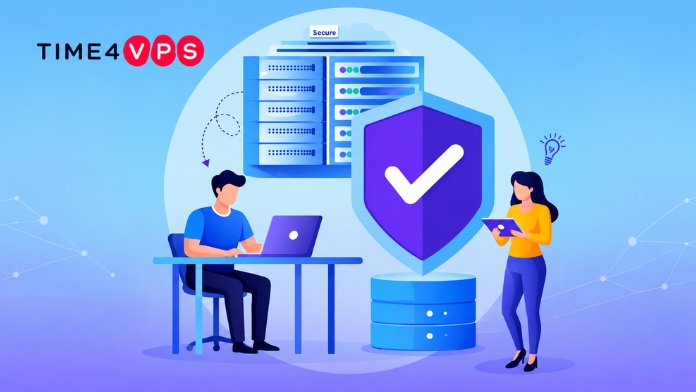

A website may start with a simple hosting plan, but as traffic, content and online activities increase, the hosting environment may need to change as well. Businesses, developers, freelancers and website owners often reach a point where shared hosting no longer provides the flexibility they need. This is where a Virtual Private Server, commonly known as a VPS, can become a useful option.
A VPS provides an isolated virtual server environment with dedicated allocations of resources such as CPU, RAM, storage and bandwidth. It gives users considerably more control over their hosting environment and can support websites, applications, databases, testing projects and other online services.
Time4VPS provides several VPS solutions, including Linux, Windows, Container and Storage VPS, as well as managed Linux options. Its infrastructure is designed for users who want scalable resources and greater control over their server environment.
Choosing the right VPS does not necessarily mean selecting the most powerful plan available. The better approach is to understand what your project actually needs and then choose resources accordingly.
Understand What Your Project Requires
The first step is to identify what you want the server to do. A small business website may have very different requirements from an application, development environment or database-heavy project.
For a basic website, the most important considerations may be storage, bandwidth and enough processing power to handle normal visitor traffic. A web application may require more RAM or CPU resources, while a development project could need specific operating systems or software configurations.
It is also useful to think about future requirements. A website that receives only a few hundred visitors today could grow considerably after a successful marketing campaign or a new product launch. Choosing a hosting environment that can be upgraded makes it easier to respond to that growth.
Time4VPS offers different VPS configurations so users can select resources according to their individual projects. The company also states that resources can be upgraded as requirements increase, without needing to restart or reinstall the operating system.
Before ordering, make a simple list of the applications, websites and services you expect to run. This gives you a clearer idea of the resources you actually need.

Choose the Right Operating System
The operating system is another important decision when setting up a VPS. Linux and Windows are two common choices, but the right option depends on the software you intend to use and your own level of familiarity.
Linux is widely used for websites, development environments, databases and many server applications. It can be a practical choice for users who are comfortable working through a command-line interface or using a Linux-compatible control panel.
Windows VPS can be more suitable for projects that depend on Windows-based applications or technologies. Developers and businesses should check the requirements of their software before choosing an operating system.
Time4VPS provides both Linux and Windows VPS options, along with Container VPS and Storage VPS services. This range allows users to select an environment that matches their particular technical requirements.
If you are new to server management, it is worth checking the documentation for your preferred operating system before making a decision. Understanding how updates, software installation and security are handled can make server management much easier later.
Consider CPU, RAM and Storage Carefully
CPU, RAM and storage are some of the most important technical resources on a VPS. Each one affects a different part of the server’s performance.
CPU resources are important when applications need processing power. RAM becomes particularly relevant when several applications or services need to run simultaneously. Storage is needed for website files, databases, media, applications, backups and other data.
The correct balance depends on the project. A lightweight website may not need a large amount of RAM, while a database-driven application could require significantly more resources.
Time4VPS offers several Linux VPS plans with different combinations of CPU, RAM, storage and bandwidth. This allows users to select a configuration according to the size and demands of their project.
Storage requirements should also be considered carefully. A website that mainly contains text will need considerably less space than a platform containing large images, videos or downloadable files. If storage needs are expected to increase, choosing a service that allows additional resources to be added can make future management easier.
The goal is to avoid both extremes: paying for resources that are never used and selecting a plan that becomes too limited shortly after launch.
Think About Security and Server Management
Moving to a VPS provides more control, but it also means taking responsibility for many aspects of server management. This is particularly important with self-managed VPS services.
Time4VPS explains that its standard Linux, Windows, Container and Storage VPS services are self-managed. Customers are responsible for areas such as their stored data, software installation, configuration, operating system administration and updates, while the provider handles the underlying hardware, network equipment and data centre maintenance.
This makes security planning essential. Strong passwords, secure access methods, regular updates and appropriate firewall settings should form part of a basic server-management routine.
Backups are equally important. Even when a hosting provider offers backup-related services, website owners should understand what is being backed up, how often backups are created and how restoration works.
For users who do not want to handle server administration themselves, a managed VPS can provide a different approach. Time4VPS also offers Managed Linux VPS services where server administration is handled by the provider.
Choosing between managed and self-managed hosting should depend on your technical knowledge, available time and the complexity of your project.
Plan for Growth From the Beginning
One of the main reasons businesses move to VPS hosting is the need for greater flexibility. An online project can change quickly, and the hosting environment should be able to keep up.
A new website may initially require only modest resources. After publishing new content, launching advertising campaigns or gaining more customers, traffic can increase significantly. If the hosting plan cannot accommodate that growth, performance problems may follow.
Time4VPS highlights the ability to scale resources according to changing project requirements. Its VPS infrastructure is designed to allow users to upgrade their plans and add resources as their projects develop.
Planning for growth does not mean buying the largest package from day one. Instead, monitor resource usage and upgrade when there is a genuine need.
It is also useful to consider the location of the server. Time4VPS operates its data centre in Vilnius, Lithuania, so businesses should consider where their main visitors or users are located and review network performance for their target audience.
This is particularly relevant for international websites and applications where response times can affect the user experience.
Build a Hosting Setup That Fits Your Workflow
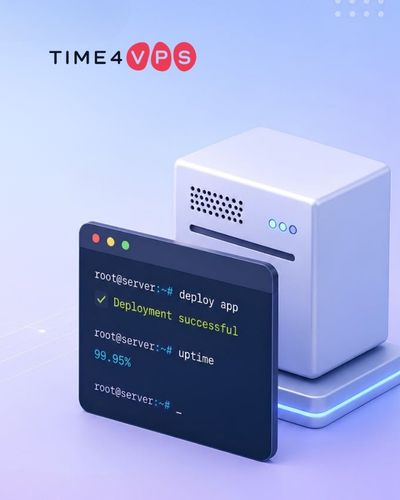
The best VPS environment is one that works naturally with the way you manage your project. Developers may want root access and command-line control, while website owners may prefer a graphical control panel.
Time4VPS supports several management tools and control panels, including cPanel, Plesk and DirectAdmin for compatible services. It also supports different Linux and Windows distributions, giving users flexibility when configuring their server.
A VPS can be used for many purposes beyond traditional website hosting. Time4VPS lists uses such as cloud storage, VPN hosting, software development and testing, databases and game servers alongside website hosting.
Before choosing a plan, think about how you will actually manage the server. If you are comfortable with technical administration, a self-managed VPS can provide significant control. If server maintenance is outside your expertise, a managed option may be easier to handle.
It is also helpful to keep documentation for your setup. Record important configuration details, software versions, backup procedures and access information in a secure place. This can save considerable time when troubleshooting or making future changes.
A VPS can provide a strong foundation for a growing online project, but the most important decision is choosing a configuration that matches the project’s real requirements. By understanding resource needs, selecting the appropriate operating system, planning for security, monitoring growth and choosing the right level of management, website owners can create a hosting environment that is both practical and adaptable.