


Turn Bible Reading Into Deeper Study
For many people, reading the Bible is an important part of everyday life. However, there is a big difference between simply reading a passage and taking time to understand its historical setting, language, themes, context, and meaning. When questions arise, having the right resources can make personal study much more rewarding.
Logos is designed as a Bible study platform that brings Scripture, books, research tools, and study resources together in one place. The platform is intended for everyone from individual readers and small-group leaders to pastors, teachers, and seminary students.
Instead of moving between several books and websites, users can search biblical passages, explore topics, compare resources, and investigate unfamiliar words within the same study environment.
This can be especially useful when a short passage raises a much bigger question. A single verse may connect to historical events, theological concepts, other passages, or particular words in the original biblical languages. A structured study platform makes it easier to follow those connections.
The goal is not simply to collect more information. It is to create a more organized approach to studying Scripture so that readers can spend less time searching for resources and more time engaging with what they discover.
Explore Scripture Beyond a Single Translation
Reading different Bible translations can reveal details that might otherwise be overlooked. One translation may use a particular phrase while another communicates the same idea differently. Comparing translations can therefore be a useful part of careful Bible study.
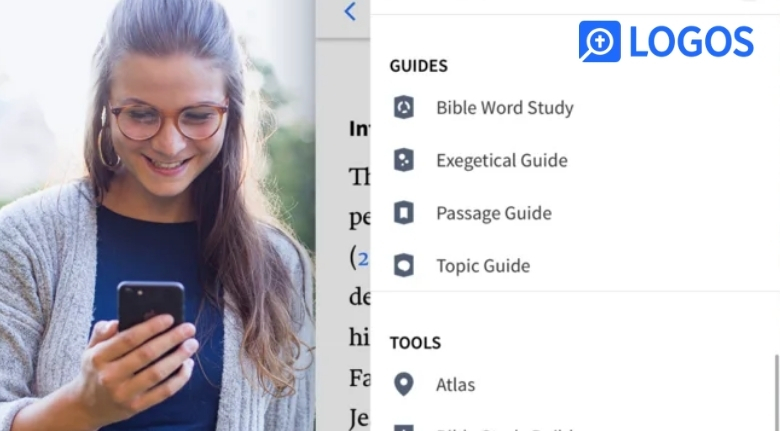
Logos allows users to access and work with multiple Bible resources while conducting searches and studying passages. Its platform includes Bible Search, Books Search, Bible Study Builder, Bible Word Study, and other research features depending on the version being used.
This makes it easier to examine a passage from several perspectives. Instead of reading one translation and immediately moving on, users can compare wording and investigate why particular terms or phrases are significant.
The platform also provides tools for exploring biblical words and concepts. For someone studying a particular theme, this can help reveal how the same idea appears across different parts of Scripture.
Such tools can be particularly valuable for students and teachers. A question that initially seems simple can become the starting point for a much broader study.
At the same time, technology should support careful reading rather than replace it. The most useful approach is to begin with the biblical text, ask thoughtful questions, and then use research tools to investigate those questions.
Build a Personal Digital Library
Bible study often involves more than one book. Commentaries, dictionaries, theological works, language resources, devotionals, historical studies, and academic texts can all contribute different perspectives.
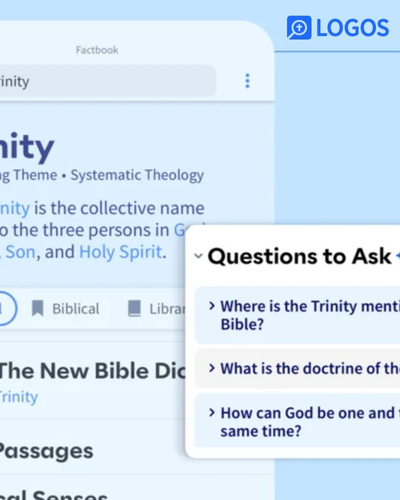
Logos brings these types of resources into a searchable digital library. The company currently describes its collection as containing more than 250,000 Christian books and courses.
A digital library can be particularly convenient for people who do not want to carry several physical books while studying. Instead, a large collection can be accessed from a computer or other supported device.
Search functionality also changes the way people interact with books. Rather than remembering which physical volume contained a particular discussion, users can search their available resources for relevant terms and passages.
This is especially helpful when researching a specific topic. A student preparing an assignment, for example, may need to locate multiple perspectives on a theological question. A pastor preparing a sermon may want to compare several commentaries before deciding how to approach a passage.
The value of a digital library therefore comes not only from the number of books but also from how easily those resources can be connected to a study project.
Make Research More Efficient With Smart Tools
One of the biggest challenges in serious Bible study is managing the amount of information available. Searching through books manually can take a considerable amount of time, particularly when researching broad topics.
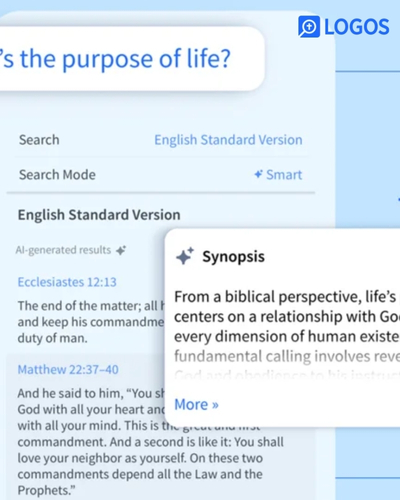
Logos includes Smart Search alongside traditional search options. According to its support documentation, Smart Search can search books, tools, and resources and return relevant material based on the meaning of the user’s search rather than relying only on exact wording.
This can make research more approachable for users who are not familiar with advanced search syntax. Someone can begin with a straightforward question and then explore the results to identify useful resources.
The platform also includes tools for exploring biblical people, places, events, concepts, and themes. These features can help users follow what the company describes as Bible-study “rabbit trails” without losing the original context of their research. (Logos)
For beginners, this can make deeper study feel less intimidating. Instead of needing to understand complicated research methods from the beginning, users can start with basic searches and gradually learn more advanced techniques.
For experienced researchers, more detailed search options can provide additional control. The desktop version supports advanced research features such as syntax searches, morphology-related tools, visual filters, and other study documents.
Prepare Sermons and Bible Studies More Effectively
For pastors, teachers, and small-group leaders, Bible study often has a practical goal. Research eventually needs to become a lesson, discussion, sermon, or presentation that other people can understand.
Logos includes tools designed to support sermon preparation and Bible-study planning. Its resources include sermon-related tools, study guides, and courses focused on developing practical research skills.
A structured workflow can make preparation easier. Instead of beginning with a blank page, a teacher can first study the passage, explore its context, examine related resources, identify key themes, and then organize the material into a clear teaching structure.
This approach can also reduce the risk of relying on one commentary or one interpretation. Consulting multiple resources encourages broader research and gives the teacher more information from which to develop an informed lesson.
Logos also offers training resources covering topics such as basic searching, advanced searching, taking notes, studying biblical words, and preparing sermons.
That learning support can be valuable for new users. A powerful platform can feel complicated at first, but structured training helps users gradually become comfortable with its features.
Study Wherever Your Schedule Takes You
Modern Bible study does not always happen at a desk. People read Scripture during commutes, at home, between classes, while traveling, or during quiet moments throughout the day.
Logos provides desktop, web, and mobile options, allowing users to access their books and study tools across different environments. The platform comparison confirms that books and several core search functions are available across desktop, mobile, and web versions, although individual features vary by platform.
The mobile experience can be particularly useful for people who want to keep study resources available while away from their computer. The mobile app supports Bible study, searching, notes, and other features depending on the user’s setup.
This flexibility means study does not have to stop simply because you are away from your main workspace.
Synchronization can also make longer study projects easier to manage. Notes, reading plans, and other study materials can remain connected across supported devices, helping users continue where they previously stopped.
For students and ministry leaders with busy schedules, that flexibility can make consistent study more realistic.
Create a Study Routine That Actually Works
Having access to powerful resources is helpful, but the most effective Bible study system is one that you can use consistently. A huge digital library will not be useful if you never have a clear plan for using it.
Start with a manageable routine. Choose a passage, read it carefully, write down your questions, and then use Logos to investigate the areas you want to understand better.
You can gradually add additional resources such as commentaries, dictionaries, theological books, language tools, or courses. There is no need to explore everything at once.
Logos also offers topical guides covering books of the Bible and theological subjects, providing curated starting points for people who want direction when beginning research.
Another useful habit is taking notes during study. Instead of relying on memory, record important observations, questions, cross-references, and conclusions. Over time, these notes can become a personal record of your learning journey.
For students, a structured approach can make academic research easier. For pastors, it can provide a repeatable sermon-preparation workflow. For individual readers, it can turn casual reading into a deeper and more intentional practice.
The key is consistency rather than complexity. Even a simple study routine can become more meaningful when supported by the right resources.
Logos brings together Bible study tools, digital books, research features, courses, and resources designed for different levels of study. Whether you are reading Scripture for personal growth, preparing a small-group lesson, studying theology, or developing sermons, having these resources in one environment can make research more organized.
The platform’s combination of searchable books, biblical research tools, mobile access, study guides, and training resources makes it suitable for both beginners and experienced students.
The most important thing is not how many tools you use. What matters is whether those tools help you ask better questions, understand the context of Scripture, compare reliable resources, and develop a more thoughtful approach to study.
Start with one passage. Follow the questions that naturally arise. Explore the relevant resources, take useful notes, and gradually develop a routine that works for you.
With a consistent approach, Bible study can become more than a quick reading session. It can become an organized process of discovery, reflection, research, and learning.